In 1990s Nige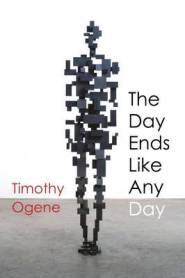 ria, Sam, a young man, begins his life’s journey in O. situated east of Port Harcourt; as the “lazy stroller” he calls himself, he moves constantly in and out of the text in a cinematographic way. He introduces us to Pa Suku, Ma Ike, Ricia, Dora, Osagie, Margaret and all the other characters that mark his path. From the small crowded flat in which he lives with his family to the Delta State University in Abraka he later attends, Sam’s excursion through life guides the reader through past (the Biafran war and some events occuring back then) and present (President Sani Abacha’s years).
Timothy Ogene’s beautiful novel is a new form of Bildungsroman, in which the theme of coming of age becomes a coming of language: Sam’s story is also a journey through books and memories, so much so that a life’s journey is not only oriented forwards, but also backwards.
Like Sam, the reader is constantly going back and forth to the past through words and the images and sometimes the physical sensations they leave in our lives. As the title suggests, the days become not a flow of time-limited sequences, but an eternal present that shrinks or expands through the power of our own mind.
Ogene revisits the age-old theme of identity and transposes it into a world in which identities are constantly rooted out to be planted elsewhere, both never really free from their native soil and enriched by the foreign adoptive soils. The founding encounters in Sam’s life are also the encounters with his own past and his old self, now reshaped and revisited by the passing of time and the inevitable questioning of what life actually means:
“Old Jumbo’s flowers were not as unkempt as I remember them. (…) State School One was east of the blocks. But in my head, in my recollection, it is positioned west. What else do I misremember? (…) It does not matter anymore. I remember what I remember, or what I consistently made myself remember. We are, indeed, wired to remember in twos: duplicates and originals. The original loses its composition the farther away we are from it.” (p.145)
The Day Ends Like Any Day by Timothy Ogene
978-1-910688-29-8 | Holland House | 2017
Review by Ioana Danaila

Ioana Danaila was born in Romania. She graduated from University Lyon 2 Lumière with a Masters in Postcolonial Literature and a First degree in French for Non-Francophone people. She has published short stories and translated books from French to Romanian. She speaks Romanian, French, English, and Spanish and teaches English to high school students in France
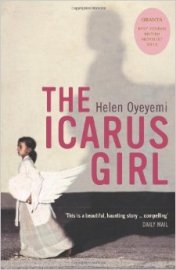 Then, without opening her eyes, she was caught in the crisp outward shattering of glass as the mirror crack’d from side to side, fying out of its flame. At the centre of it all was TillyTilly, manically screaming : ‘Seven years’ bad luck ! Seven years’ bad luck ! SEVEN YEARS BAD LUCK !
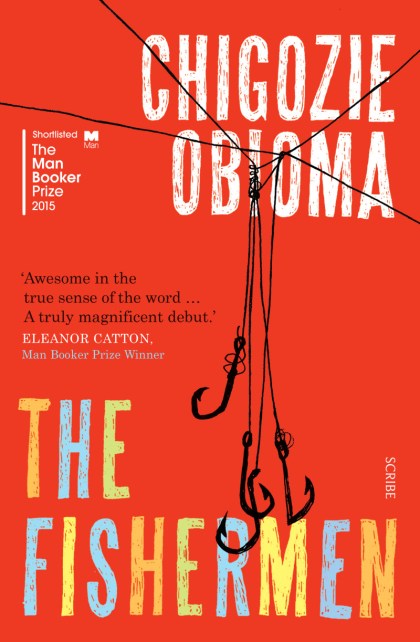 Omi-Ala was a dreadful river. Long forsaken by the inhabitants of Akure town like a mother abandoned by her children.… It surrounded Akure like ans snaked through its length and breadth. Like many such rivers in Africa, Omi-Ala was once believed to be a god : people worshipped it.…)This changed when the colonists came from Europe [and] began to see it as an evil place.
 Nigeria in the 1990s. Military régimes follow one another, yet no-one seems to take an interest in people’s daily lives, their despair and their lack of perspective.
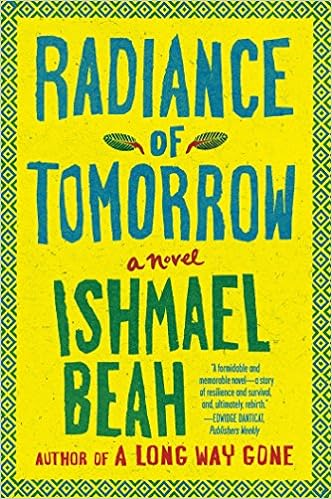 After the civil war, Imperi, a small Sierra Leonean town, tries to rebuild the life it used to have. Three characters, Kadie, Moiwa and Kainesi, come to their native town waiting for the return of the younger generation. Everybody is willing to start anew.
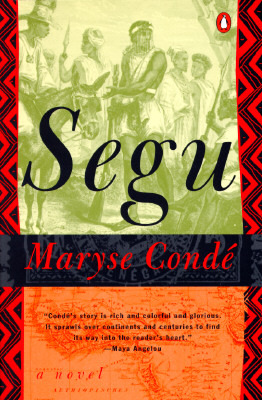 Ségou, south-centre of present-day Mali, cradle of the Bambara people, 18th century.
 “I remember the first years when I was employed in an office working for the Equipment Seecretary. It was Hlima who had first suggested me to claim a commission for every file I would sign. It was one of our biggest fights. At first, I tried to tell explain her that corruption was a cancer that was eating away the country, and that my education, my moral principles, my consciousness were firmly opposed to this practice. She told me I wasn’t man enough! This time I laughed. She could not bear this and started to throw objects at me.” (p.27, ABR translation)
 The African Book Review
